Check out our most popular compounded medications! Get Started

Levothyroxine sodium is a synthetic thyroid hormone (T4), given by mouth or by injection, that a pharmacy may compound when a prescriber orders it.
Levothyroxine is a man-made form of thyroxine (T4), the main thyroid hormone. The body converts T4 to the more active T3, which enters cell nuclei and switches on genes that control metabolism. Manufactured oral products include Synthroid, Levoxyl, Unithroid and generic tablets, Tirosint capsules, and the oral solutions Tirosint-SOL and Thyquidity. These are indicated as replacement therapy in congenital or acquired hypothyroidism, and as an add-on to surgery and radioiodine to suppress TSH in well-differentiated thyroid cancer. They are not indicated to shrink benign thyroid nodules or goiter in people with enough iodine. Levothyroxine sodium injection is indicated for myxedema coma in adults. A prescriber might order levothyroxine compounded in a strength or form that is not manufactured, or without a dye or other excipient a patient cannot take. Compounded preparations are not FDA-approved and require a prescription.
Levothyroxine labels carry a boxed warning: thyroid hormones should not be used, alone or with other drugs, to treat obesity or for weight loss; normal doses do not cause weight loss in people with normal thyroid function, and larger doses can cause serious or life-threatening toxicity, especially with stimulant appetite suppressants. Do not use it if you have uncorrected adrenal insufficiency. Too much can cause a fast or irregular heartbeat and chest pain, especially in older adults and people with heart disease; get help right away for these. Over-replacement can thin bones, and it can worsen blood sugar control in diabetes. Calcium carbonate, iron, bile acid binders, sevelamer, antacids, proton pump inhibitors, soy, walnuts and fiber can lower absorption; labels advise separating calcium and iron by at least 4 hours. It can increase the effect of warfarin. Do not stop it during pregnancy; needs often rise, and TSH should be checked. LactMed reports no adverse infant effects at replacement doses; the label says there is not enough information on effects in a breastfed infant. Talk to your prescriber or pharmacist about side effects.
Levothyroxine is synthetic L-thyroxine that acts like endogenous T4; about 80 percent of circulating T3 comes from peripheral deiodination of T4, and T3 binds nuclear thyroid receptors to regulate transcription (Levoxyl label). Per the label, oral absorption is 40 to 80 percent, mainly from the jejunum and upper ileum, increased by fasting and reduced by malabsorption, soy and fiber; thyroid hormones are over 99 percent protein bound; and the T4 half-life is about 6 to 7 days in euthyroid patients, 3 to 4 days in hyperthyroidism and 9 to 10 days in hypothyroidism. Labeled indications: hypothyroidism and pituitary TSH suppression in well-differentiated thyroid cancer (Levoxyl tablets, Tirosint capsules, Tirosint-SOL and Thyquidity oral solutions, NDA); myxedema coma (levothyroxine sodium injection, NDA). Tirosint-SOL is contraindicated with glycerol hypersensitivity. Levothyroxine has a narrow therapeutic index. StatPearls lists subclinical hypothyroidism and cadaveric organ recovery as off-label uses; these are not FDA-approved indications. Treat adrenal insufficiency with glucocorticoids first. Interactions also include digoxin (reduced effect), tricyclic antidepressants, ketamine, sympathomimetics and tyrosine kinase inhibitors. StatPearls advises TSH checks 6 to 8 weeks after starting and keeping patients on the same product. Not a controlled substance. Dosing is per prescriber.
Compounded at Bayview
Patient guides for the preparations we make most often. Each one is compounded to order and requires a prescription.
For prescribers
Every preparation in our formulary that contains this ingredient. Strength, base and dose form are set by the prescription.
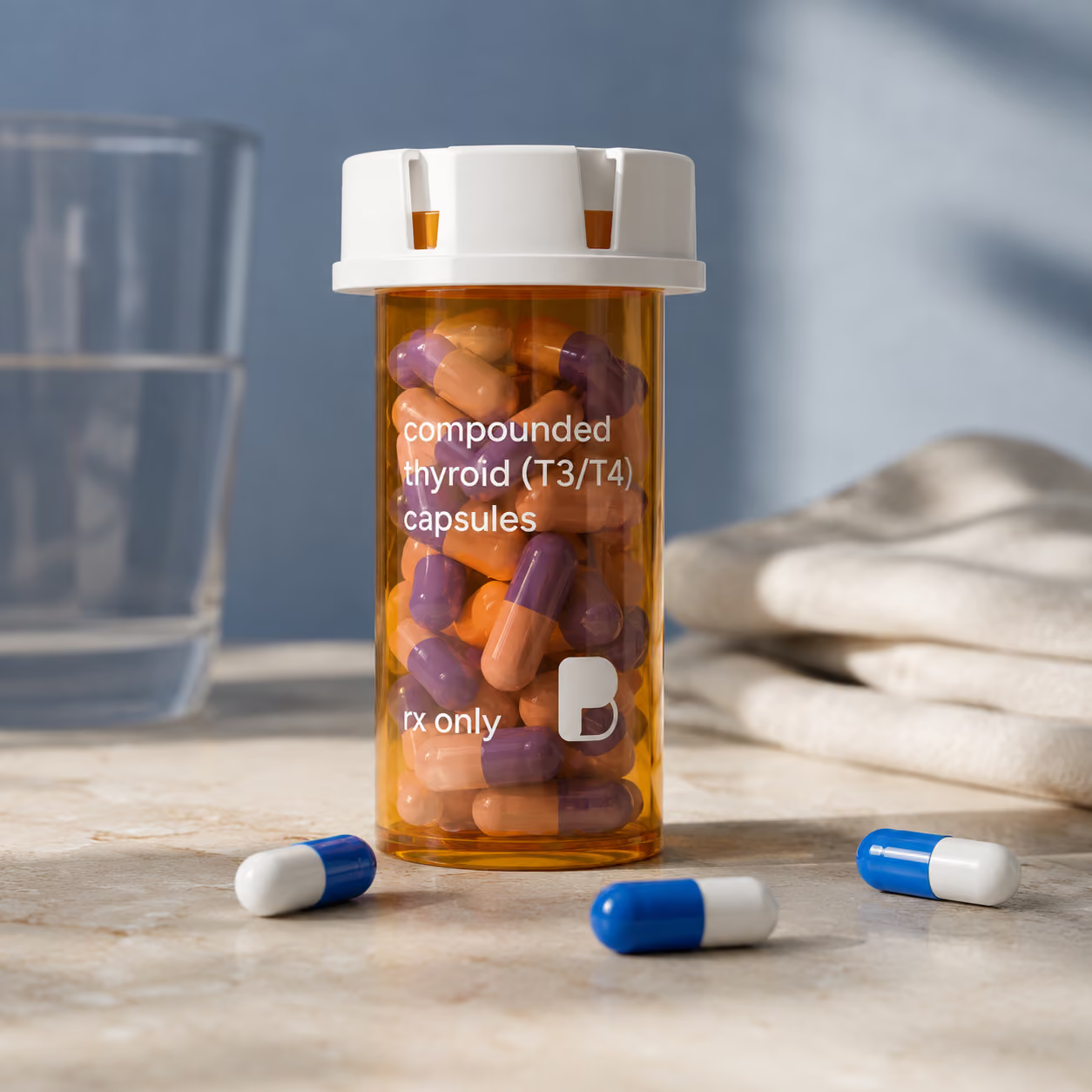
Standard first-line therapy for hypothyroidism is a commercial levothyroxine product. Compounding is used when a provider wants a custom dose or T3:T4 ratio, or a capsule without certain dyes, fillers, or allergens. Compounded thyroid is not FDA-approved.
Other salt forms of this molecule, and ingredients commonly compounded alongside it.
This page describes an active pharmaceutical ingredient, not a finished drug product. Bayview Pharmacy compounds preparations containing it only on a prescriber's order for an individual patient.
Compounded preparations are not FDA-approved, and the FDA has not evaluated them for safety, effectiveness, or manufacturing quality. Nothing on this page is a claim that any preparation is effective for any condition.
A valid prescription is required. Availability depends on Bayview's licensure in your state. This page is general information, not medical advice. Discuss your situation with a licensed healthcare provider.
Our pharmacists work with prescribers to build preparations around a patient's dose, form and tolerances. Ask us what is possible with this ingredient.