Check out our most popular compounded medications! Get Started

Acetylcysteine (NAC) is a mucus-thinning and antioxidant medicine that compounding pharmacies prepare as oral capsules, inhalation solutions and ophthalmic drops.
Acetylcysteine is the N-acetyl form of the amino acid cysteine. Its sulfhydryl group opens the disulfide bonds that hold mucus together, lowering its viscosity, and in the body it supplies cysteine so the liver can rebuild glutathione, its main detoxifying antioxidant. Two kinds of manufactured product exist. Acetadote (Cumberland Pharmaceuticals) is an injection FDA-approved to prevent or lessen liver injury after a potentially toxic acetaminophen ingestion. Acetylcysteine solution for inhalation (for example American Regent) is FDA-approved as adjuvant therapy for abnormal, viscid or inspissated mucus in bronchopulmonary disease, cystic fibrosis and tracheostomy care, and orally for acetaminophen overdose. No FDA-approved acetylcysteine capsule or eye drop is marketed; an FDA-approved effervescent tablet for acetaminophen overdose (Cetylev) was approved in 2016 and is listed by FDA as discontinued. Prescribers may order it compounded as capsules in a chosen strength, as ophthalmic drops, or in a vehicle free of a given excipient. Compounded preparations are not FDA-approved and require a prescription.
Neither manufactured label carries a boxed warning. Acetylcysteine is contraindicated in anyone who has had a hypersensitivity reaction to it; the Acetadote label warns of serious acute reactions including anaphylaxis, rash and low blood pressure. Inhaled acetylcysteine can trigger chest tightness and bronchospasm, so people with asthma should be watched closely, and it liquefies secretions that may need suctioning. Other reported effects include mouth irritation, nausea, vomiting, runny nose, fever, drowsiness and a disagreeable odor that fades. Reviews note low blood pressure and headache with nitroglycerin and lowered carbamazepine levels. The inhalation label says to use it in pregnancy only if clearly needed, and it is not known whether the drug passes into breast milk; the Acetadote label suggests pumping and discarding milk for 30 hours after a dose, while inhaled drug is minimally absorbed. If side effects are severe or persist, talk to your prescriber or pharmacist.
Mucolytic activity derives from the free sulfhydryl group, which cleaves disulfide linkages in mucoproteins; hepatoprotection derives from maintaining or restoring glutathione and binding the toxic acetaminophen metabolite, with reported free radical scavenging. After intravenous dosing the terminal half-life is 5.6 hours, protein binding 66 to 87 percent and steady-state volume of distribution 0.47 L/kg. Labeled indications: Acetadote injection for acetaminophen overdose; acetylcysteine inhalation solution for viscid mucus in acute and chronic bronchopulmonary disease, cystic fibrosis, tracheostomy care and diagnostic bronchial studies, and orally for acetaminophen overdose. Prescribers have ordered compounded acetylcysteine ophthalmic drops for keratoconjunctivitis sicca, and the literature describes off-label use in acute hepatic failure, contrast nephropathy prevention and psychiatric conditions, with evidence graded as limited (StatPearls, 2024). Dosing and route per prescriber. Monitoring: anaphylactoid reactions during IV administration (rate related, more frequent in reactive airway disease), bronchospasm with inhalation, hepatic panel and INR in overdose (IV acetylcysteine can falsely raise INR and urine ketones), and fluid status in heart failure. The inhalation label lists tetracyclines, erythromycin lactobionate, ampicillin, several enzymes and hydrogen peroxide as incompatible in nebulizer admixtures.
Compounded at Bayview
Patient guides for the preparations we make most often. Each one is compounded to order and requires a prescription.
For prescribers
Every preparation in our formulary that contains this ingredient. Strength, base and dose form are set by the prescription.
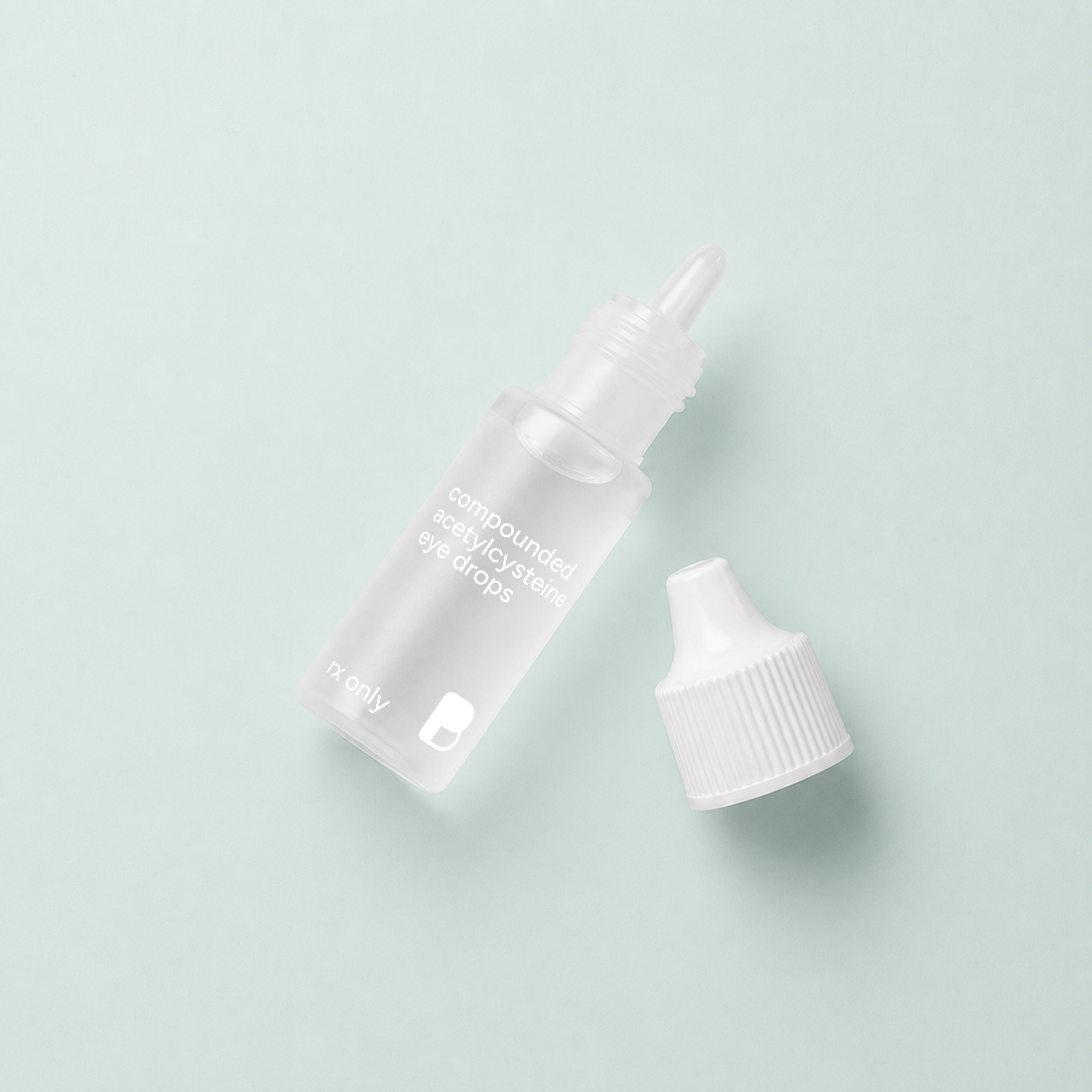
Eye doctors prescribe them as a mucolytic to thin and loosen mucus and filaments on the eye surface in conditions such as filamentary keratitis and dry-eye disease. They are used off-label, and a valid prescription is required.
Acetylcysteine is a mucolytic. It breaks the chemical bonds that hold mucus together, thinning it and making the sticky strands (filaments) that form in filamentary keratitis easier to clear. With regular use as prescribed, many patients notice less of the gritty, foreign-body feeling those filaments cause. Unlike artificial tears, it thins the mucus itself rather than just lubricating the eye.
No. There is no FDA-approved acetylcysteine eye drop in the United States, so your eye doctor prescribes it off-label and a compounding pharmacy prepares it sterile to that prescription. Compounded preparations are not FDA-approved. Acetylcysteine drops have been used in other countries for decades, which is where much of the supporting clinical experience comes from.
Other salt forms of this molecule, and ingredients commonly compounded alongside it.
This page describes an active pharmaceutical ingredient, not a finished drug product. Bayview Pharmacy compounds preparations containing it only on a prescriber's order for an individual patient.
Compounded preparations are not FDA-approved, and the FDA has not evaluated them for safety, effectiveness, or manufacturing quality. Nothing on this page is a claim that any preparation is effective for any condition.
A valid prescription is required. Availability depends on Bayview's licensure in your state. This page is general information, not medical advice. Discuss your situation with a licensed healthcare provider.
Our pharmacists work with prescribers to build preparations around a patient's dose, form and tolerances. Ask us what is possible with this ingredient.